
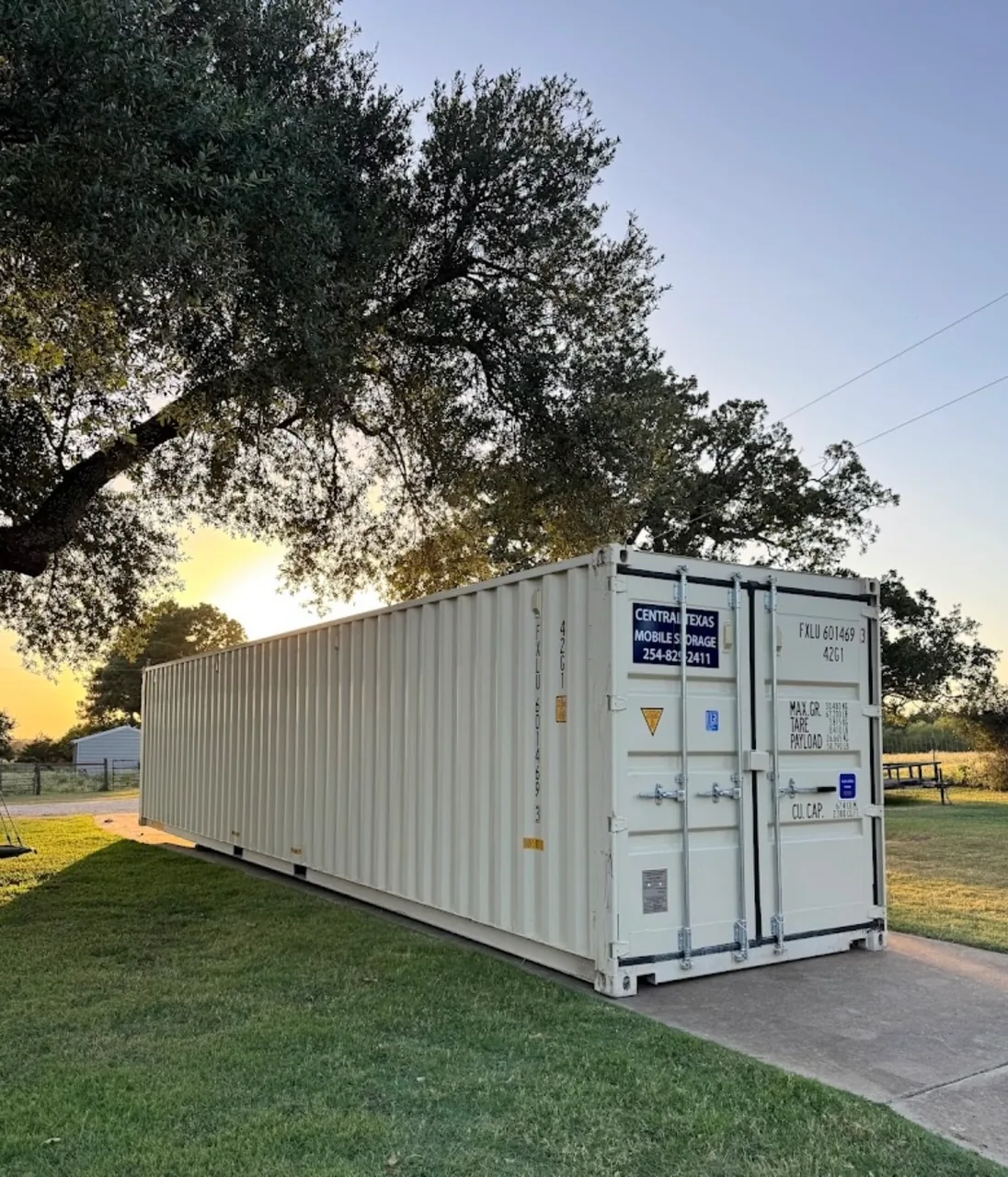
When buying a used shipping container, inspect the roof, walls, floor, doors, seals, and frame to confirm the unit is sound and wind and water tight, with no soft spots, holes, or gaps that let in water. Knowing the container's condition grade before you buy tells you what to expect.
A used container can be a smart buy
A used shipping container gives you the same heavy steel, weatherproof, lockable structure as a new one, usually for less. The trade-off is condition: used units have already spent years in service, so the difference between a great buy and a frustrating one comes down to a careful inspection. This guide walks through exactly what to check before you commit.
If you have not yet decided whether to buy at all, it is worth reading renting vs buying a shipping container first. Once you know you want to own one, use the checklist below.
Start with the grade
Most sellers describe containers by condition grade, from one-trip (near new) down to wind and water tight (used but sound) and finally as-is units sold for non-storage projects. Knowing the grade tells you what to expect before you ever see the unit. We break down what each term means in storage container conditions explained. For dependable storage, wind and water tight is the standard to meet or beat.
One more clue worth reading: the data plate on the left-hand door. Containers used in international shipping carry a safety approval plate required by the International Convention for Safe Containers (CSC), adopted by the International Maritime Organization in 1972. The plate lists the manufacture date and structural ratings, so it tells you how old the unit actually is regardless of how fresh the paint looks.
The inspection checklist
Walk the whole container in daylight if you can. Open the doors fully, step inside, and pull them mostly closed so you can look for any light leaking through. Here is what to look at, and why each item matters.
| Area to inspect | What good looks like | Red flags |
|---|---|---|
| Roof | Flat or only lightly dented, no standing-water rust pits | Deep dents that pool water, holes, or heavy flaking rust |
| Walls | Solid corrugated steel, only surface rust | Soft spots, patches hiding damage, daylight through panels |
| Floor | Solid plywood or bamboo decking, firm underfoot | Spongy, rotted, or oil-soaked boards; gaps to the ground |
| Doors | Swing and seal smoothly, locking gear works | Bent frames, seized hinges, doors that will not align |
| Door seals (gaskets) | Pliable rubber that seats all the way around | Cracked, missing, or flattened gaskets that let water in |
| Frame and corners | Straight rails and square corner castings | Bowing, twisting, or cracked welds at the corners |
| Interior | Dry, no water stains, no strong odors | Water marks, mildew smell, or chemical residue |
Check that the doors actually work
Container doors are where most usability problems show up. On a level surface they should swing freely, the locking bars should rotate without forcing, and both doors should meet evenly. Doors that bind or will not seal are often a sign the unit was set on uneven ground or took a hit in transit. Test them yourself rather than taking it on faith.
Look for water, the most common enemy
Water is what ruins stored belongings, so hunt for it. Pull the doors nearly shut and look for daylight along the top and sides. Check the ceiling and upper corners for stains, and run your hand along the floor edges. A faint musty smell usually means moisture has been getting in. In our climate, condensation matters too; once you own the unit, our guide on keeping a container cool and dry in Texas will help you keep it that way.
Match the unit to the job
Condition is only half the decision. Make sure the size and type fit your plans before you buy. If you are unsure whether you need a standard 20 or 40, review 20-foot vs 40-foot containers. If you will store anything sensitive to heat, consider an insulated unit, and if you need easy full-width loading, look at an open-side container.
Plan for delivery
A used container is only a good buy if you can get it placed where you need it. Confirm you have a firm, level spot and a clear, straight approach for the delivery truck. Our walkthrough on preparing your site for delivery covers the access and ground conditions that make placement smooth.
Buy with confidence
The simplest way to avoid surprises is to buy from a local company that inspects its inventory and will tell you honestly what condition a unit is in. We sell containers across Central Texas and are glad to walk you through your options. Browse containers for sale or request a quote and we will help you find a sound unit for the job.