The short version
Texas does not have one statewide rule for storage containers. Whether you need a permit, and where you can place a container, depends on your city, county, and sometimes your HOA. Out in rural and unincorporated areas, restrictions are often light. Inside incorporated cities and residential neighborhoods, you are more likely to run into zoning rules, placement requirements, or permits. The safe move is always to confirm with your local authority before delivery day.
The reason it varies so much is that zoning in Texas is a local power: Chapter 211 of the Texas Local Government Code delegates zoning authority to individual municipalities, so each city writes and enforces its own rules for what can sit on a lot.
This is general guidance, not legal advice, rules change and vary by location, so treat the steps below as a checklist for the questions to ask, not a final answer for your specific lot.
Who to check with
- City planning or zoning department if your property is inside city limits. Ask about zoning for your parcel, container rules, and whether a permit applies.
- County offices if you are in an unincorporated area. Requirements are often lighter, but it is still worth a call.
- Your HOA if you have one. Association covenants can be stricter than the city and may limit or prohibit containers.
- Floodplain or deed restrictions that may apply to the specific property regardless of the broader zoning.
What local rules often cover
When there are rules, they usually touch on a few common themes. Knowing them helps you ask the right questions:
- Where the container can sit, setbacks from property lines, whether it can be in a front yard, and required distance from structures.
- Size and number of containers allowed on a lot.
- Duration, whether a container is treated as temporary (tied to a project) or allowed permanently.
- Screening or appearance requirements in some residential zones.
- Permits for placement, and separately for any electrical or modifications if you are setting up an office.
Residential vs commercial
Commercial, industrial, and agricultural properties generally have the most flexibility for on-site containers. Residential lots, especially in established neighborhoods or HOAs, are where restrictions show up most. If you are a homeowner, a quick call to the city and a look at your HOA covenants will save you headaches later.
A simple pre-delivery checklist
- Confirm whether your address is inside city limits or unincorporated.
- Call the relevant city or county office about container and zoning rules.
- Check HOA covenants and any deed restrictions.
- Note any duration limits so you can plan the rental and pickup.
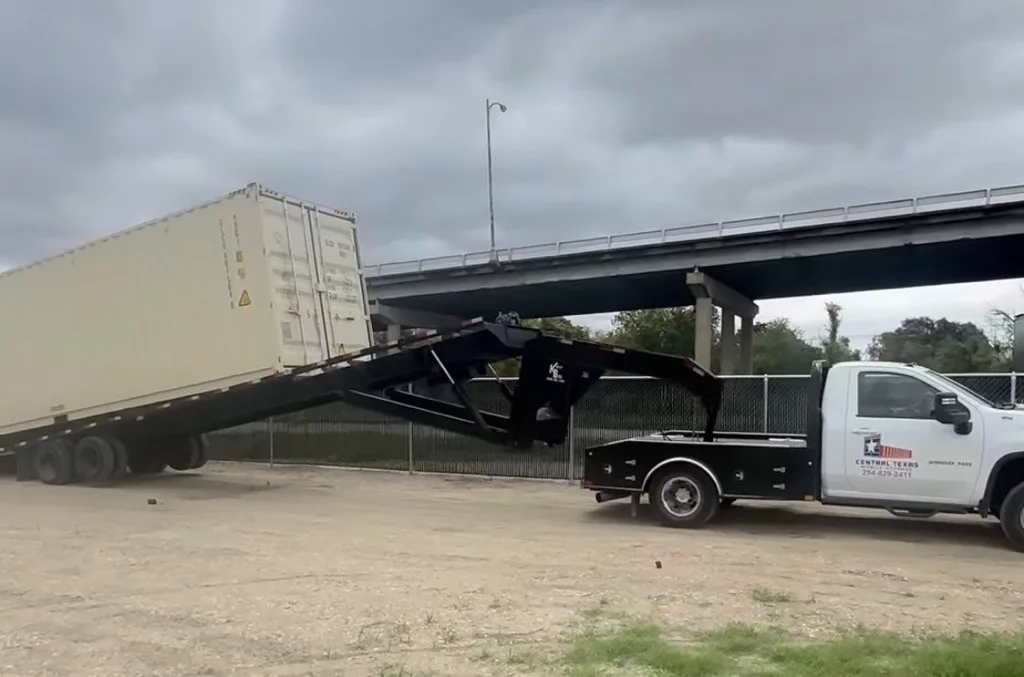
- Pick a placement spot that satisfies setbacks and still allows truck access, our site preparation guide covers the access details.
We deliver across Central Texas
Once you have the local details sorted, we handle the rest. We provide delivery and pickup throughout our service areas, including Waco and the surrounding communities. Tell us your timeline and placement and request a quote, and we will get your container scheduled.