The short answer
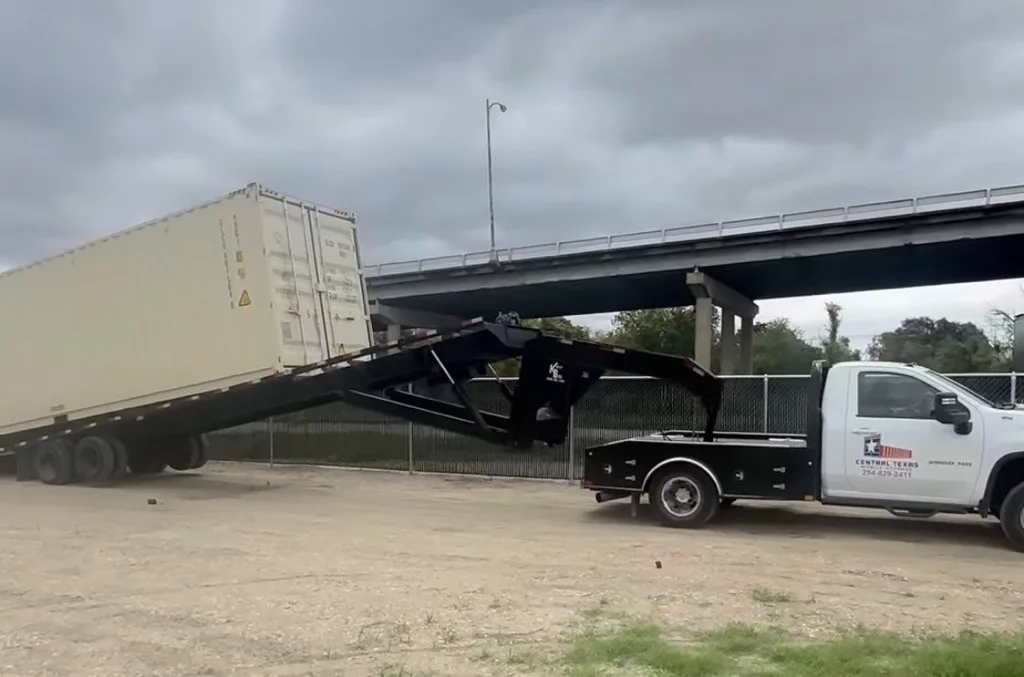
For a smooth drop-off, plan for a clear, level, straight area about 60 feet long for a 20-foot container and about 100 feet for a 40-foot container, plus room for the truck to maneuver and overhead clearance above the spot. That is more than the container's own footprint, because the truck needs space to line up, tilt, and slide the unit off the back. Here is what that actually means on your property.
Why delivery needs more than the container's footprint
Containers arrive on a tilt-bed or roll-off style truck that raises one end and eases the unit down onto the ground. To do that, the driver needs a straight shot to the drop spot and open length behind it. A tight, winding approach or a fence right behind the placement spot is what turns an easy delivery into a hard one. This is different from getting the ground ready, which our site prep guide covers; here we are focused on access and clearance.
| Requirement | 20-foot container | 40-foot container |
|---|---|---|
| Clear, straight approach | About 60 feet long | About 100 feet long |
| Width to maneuver | Driveway width plus turning room | More turning room for the longer trailer |
| Overhead clearance | Clear of lines, limbs, and eaves | Clear of lines, limbs, and eaves |
| Placement surface | Firm and level | Firm and level |
Width and turning room
Beyond length, the truck needs enough width to get into position, think a clear driveway or path without tight pinch points, narrow gates, or parked vehicles in the way. For a concrete number, standard containers are 8 feet wide under the ISO 668 freight container standard, and the delivery truck itself can be up to 102 inches (8.5 feet) wide, the maximum vehicle width allowed by Texas Transportation Code Chapter 621, so plan the path for the truck, not just the box. The longer the container, the more room the driver needs to swing and straighten out, so a 40-foot delivery asks a little more of your approach than a 20-foot does.
Overhead clearance is easy to forget
People measure the ground and forget to look up. Because the truck tilts the container high during placement, low power lines, tree branches, rooflines, carports, and signs over the drop zone can all get in the way. Walk the path and check what is above it, not just what is on it.
Not sure your site has the room?
That is exactly what we are here for. We deliver across Waco and Central Texas to driveways, job sites, ranches, and tight lots, and we are glad to talk through a challenging spot before the truck rolls. Still deciding on size? Our 20-foot vs 40-foot guide can help. Learn more about our delivery and pickup service or request a quote and we will help you plan placement.