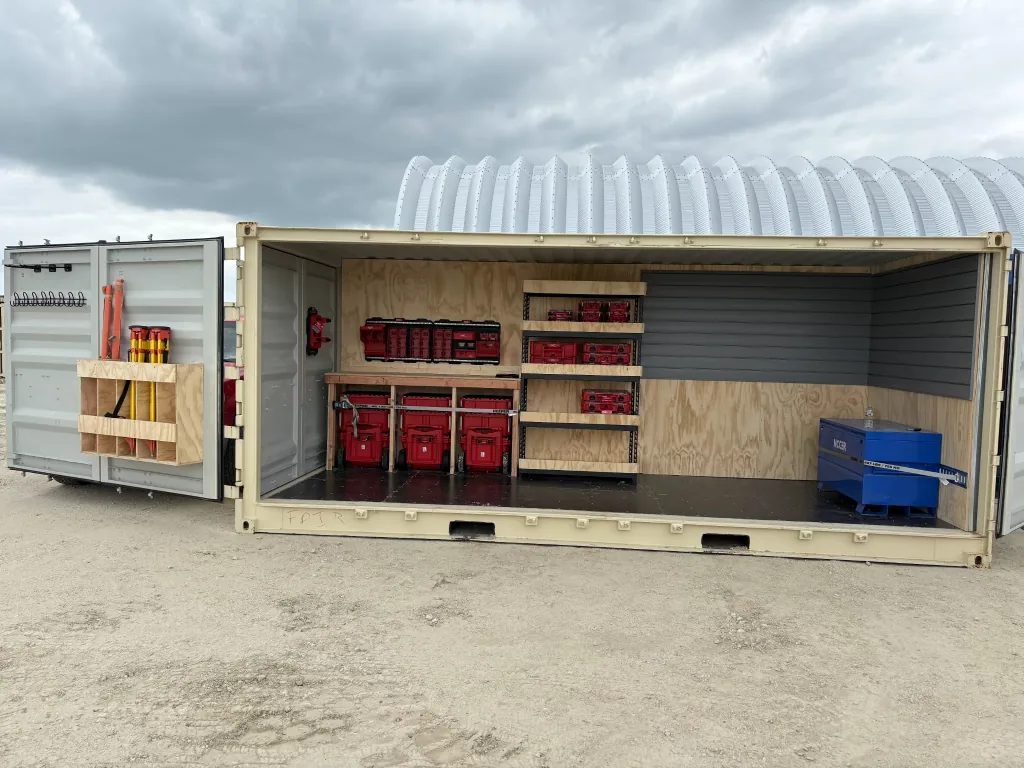
Central Texas businesses store inventory and retail overflow without a warehouse lease by placing a lockable steel storage container at their own location, which adds secure, ground-level space they control. You can scale up or down by adding a unit when you are busy and returning it when demand cools.
More room without a warehouse lease
As a business grows, inventory tends to outgrow the back room long before it justifies a warehouse. A storage container at your own location adds secure, ground-level space you control, without signing a long commercial lease or running things out of a facility across town.
Inventory and retail overflow
For shops and distributors, a container parked on site handles back-room overflow, bulk and seasonal stock, e-commerce inventory waiting to ship, and the fixtures and displays you rotate between sets. Because it is right outside, staff can grab what they need instead of driving to a remote unit.
More than just product
- Records, files, and archived documents
- Equipment, tools, and spare parts
- Furniture, fixtures, and signage
- Packaging and shipping materials
Scale up or down as you go
One of the biggest advantages over a fixed lease is flexibility. Bring in another container during a busy stretch and return it when demand cools. If your need is tied to a specific time of year, our guide on seasonal and event storage covers that pattern in detail.
A practical alternative to leasing
Comparing a container to a warehouse comes down to a few factors: commitment length, location, and how much you can flex the space. A container keeps the storage on your own lot and lets you rent or buy based on how long you need it. Owning has a tax angle as well: under IRS Publication 946, a container you buy and use in your business is tangible property with a determinable useful life, which generally makes it depreciable, so the cost is recovered through annual deductions. Our breakdown of renting vs buying a container helps you decide which fits your operation.
Where to put it at your business
A container needs firm, level ground and room for the delivery truck to position it. See how much space you need for delivery and our site preparation guide to plan the placement.
Storage that grows with you
We deliver to businesses throughout Central Texas and work around your operation. See the areas we serve, explore container rentals, or request a quote for your business.